Budget friendly bedroom decor is the practice of improving a sleeping space by spending less than a full renovation would cost. It matters because housing costs already consume a large share of most household incomes, and discretionary spending on decor needs to be chosen carefully.
What to Look for Before Spending on Budget Friendly Bedroom Decor Ideas
Before buying anything, measure the room and write down what's actually broken, worn, or missing. Many people skip this step and buy decorative items that duplicate what they already own. A clear list stops impulse spending at the source.
Housing costs are generally considered affordable when they consume 30% or less of a household's pre-tax income - according to the Colorado Division of Housing1. That figure is a useful anchor. If rent or mortgage is already pressing against that ceiling, every dollar spent on decor is coming from the same constrained budget. A household earning $40,000 per year in a region where the area median income is $80,000 sits at 50% of AMI, according to doh.colorado.gov.1 At that income level - discretionary spending on home decor is limited, which means prioritization isn't optional - it's the whole strategy.
Set a firm ceiling before shopping. A reasonable starting ceiling for a full bedroom refresh on a tight budget is somewhere between $150 and $400, depending on what's already in the room. Anything above that starts to resemble a partial renovation, not a decor update.
Identify the highest-impact change first. In most bedrooms, that's either the bedding - the lighting, or the wall treatment. Changing all three at once dilutes the budget without producing a clear result. Pick one anchor change and spend most of the budget there.
The Main Types of Low-Cost Bedroom Updates and What They Suit
Bedding updates suit anyone because they're portable. A renter who moves keeps the duvet cover. Furniture from thrift stores suits buyers who have flexibility on timing - good pieces appear unpredictably, and rushing that search means paying retail. Lighting updates suit renters specifically because plug-in sconces need no electrical work and patch holes easily on move-out.
A worked example: a $250 total budget allocated as $70 for a new duvet cover and two pillowcases - $45 for one gallon of paint and supplies, $60 for a secondhand nightstand, and $50 for plug-in sconces comes to $225 - leaving $25 for a small plant or a framed print. That covers all four visual layers of the room without crossing into renovation territory.
Quality and Safety Checks That Get Skipped on Low Budgets
Secondhand upholstered furniture carries a genuine safety risk if it pre-dates modern flammability standards. In the United States, the Consumer Product Safety Commission oversees upholstered furniture flammability requirements. Pieces made before 2021 may not meet current standards. Check for a label on the underside of the piece before buying.
Peel-and-stick wallpaper quality varies significantly. Low-quality versions leave adhesive residue that can damage painted drywall on removal, which can cost more to fix than the wallpaper itself cost. Test one panel in a low-visibility area before covering an entire wall.
Paint in older homes may cover lead paint. The EPA's Renovation - Repair and Painting Rule applies when surfaces with lead paint are disturbed. Sanding or scraping a wall in a pre-1978 home requires precautions. This isn't a decoration concern - it's a health concern, and it applies to budget projects as much as full renovations.
For bedding, thread count is a marketing figure that has limited relationship to actual durability. Material type matters more. Cotton percale and linen both hold up better to repeated washing than high-thread-count polyester blends, and are commonly available in the $40 - $70 range at discount retailers.
The Downsides Nobody Mentions
The thrift-store and secondhand route takes real time. A person who values their time at $15 or $20 per hour and spends four hours searching for one nightstand has effectively paid $60 - $80 in time cost on top of the purchase price. That erases part of the saving. The strategy works best for people who find the search enjoyable, or who have flexible schedules.
DIY painting looks worse than professional painting if the surface preparation is skipped. Bubbling - streaking, and lap marks are common on first attempts. A poorly executed accent wall is a net negative to the room's appearance. Watching a tutorial on surface preparation before starting isn't optional.
According to the U.S. Interagency Council on Homelessness, as many as 40% - 60% of people experiencing homelessness have a job, but housing is unaffordable because wages haven't kept up with rising rents.2 That context is relevant here: for households in genuinely strained positions, spending $200 on bedroom decor when rent is already consuming more than 30% of income is a real financial tradeoff - not a casual one. Decor can wait. Rent can't.
Removable wallpaper, despite being marketed as damage-free, frequently does pull paint on removal, particularly from walls with flat or eggshell finishes. Satin and semi-gloss finishes hold up better. Renters who apply peel-and-stick products to flat-painted walls risk losing security deposit funds on repainting.
How to Buy Without Getting Burned
Side-by-side comparison: buying a duvet cover set at a discount retailer for around $50 versus the same visual result assembled from separate thrift-store pieces for around $20 - the $30 difference is real, but the thrift option requires inspection for staining and odor - washing before use, and usually multiple visits to find matching pieces. The discount retailer option is clean, new, and returnable. For a buyer with limited time, the $30 premium is probably worth it.
Always verify a store's return policy before buying any item for decor purposes. Items sold as final sale can't be returned if the color is wrong in actual room lighting - and room lighting is almost always different from store lighting. The same rule applies to online purchases: check return windows before ordering.
For online marketplaces selling secondhand furniture - meet in a public place or a well-lit exterior location to inspect before paying. Never prepay for furniture pickup without seeing the piece. Scams targeting furniture buyers on secondhand platforms are documented by the Federal Trade Commission.
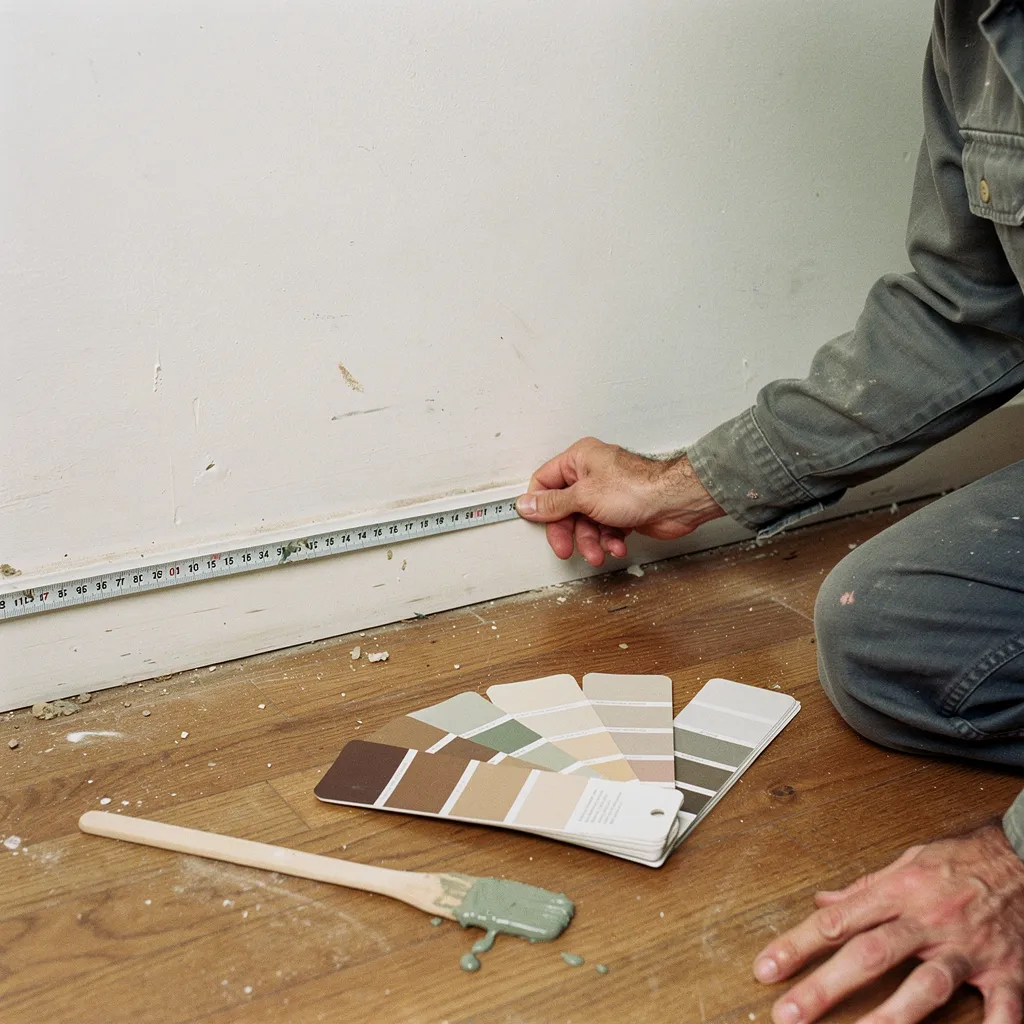
Buy paint samples ($4 - $6 per sample pot) before committing to a full gallon. Paint a 12-by-12 inch square and observe it in morning light, afternoon light, and artificial light. Colors shift substantially across lighting conditions. Skipping this step and buying a full gallon based on a chip is the single most common and most expensive mistake in DIY bedroom painting.
Myths Worth Clearing Up
Myth 1: More throw pillows always improve a bed's appearance. In practice, too many pillows create visual clutter and require storage during sleeping hours. Two or three well-chosen pillows produce a cleaner result than eight poorly matched ones.
Myth 2: Matching furniture sets look better than mixed pieces. Interior design professionals generally recommend against perfectly matched sets because they read as flat. A nightstand in a slightly different wood tone from the bed frame adds visual interest. The budget buyer who assembles furniture from different sources is often closer to a considered look than someone who buys a matching set.
Myth 3: White walls are neutral and safe. White walls reflect surrounding colors strongly, meaning a white wall in a room with blue carpet will read as slightly blue. True neutrals are warm off-whites - greiges, and soft grays. Choosing a warm neutral instead of stark white is a free improvement that costs nothing.
Myth 4: High cost equals high quality in home decor. Retail markup in the home goods sector is substantial. The same manufacturing quality frequently appears at discount retailers and at premium retailers at very different price points. Brand perception and marketing account for much of the price difference, not material or construction quality.
Where This Stops Being Enough
This guidance covers surface-level decor updates - bedding, paint, lighting - small furniture. It's not sufficient for structural problems. A room with mold, water damage, inadequate heating, or pest infestation needs professional assessment before any decorative spending is justified. Painting over water stains without addressing the moisture source causes mold to continue growing behind the wall surface.
Electrical work, including installing hardwired light fixtures or additional outlets - requires a licensed electrician in most jurisdictions. DIY electrical work in rental units typically violates lease agreements and local building codes simultaneously.
Households in financial distress - spending more than 30% of pre-tax income on housing, as noted by the Colorado Division of Housing1 - should treat decor as a low priority relative to emergency funds, debt service, and utility costs. A qualified nonprofit housing counselor, such as those certified through the U.S. Department of Housing and Urban Development - can help prioritize household spending when budgets are genuinely constrained. This article is general guidance and doesn't constitute financial advice for any individual's situation.
This approach is right for renters and owners who have a stable housing situation and a small amount of discretionary income to allocate. It's not right for households in acute financial stress, for rooms with structural or health problems, or for anyone looking for a substitute for professional interior design on a complex space.
References
- https://www.census.gov/acs/www/about/why-we-ask-each-question/rooms/
- http://www.hud.gov/helping-americans/fair-housing-act-overview
- https://www.huduser.gov/portal/datasets/il.html
- https://www.cms.gov/data-research/statistics-trends-and-reports/national-health-expenditure-data
- https://doh.colorado.gov/affordable-housing-101
- https://www.usich.gov/guidance-reports-data/data-trends
Disclaimer
This article is for general informational purposes only and isn't financial, investment, insurance - or tax advice. Rates, fees, and rules change and vary by lender and situation. For decisions about your own money, consult a qualified financial professional.