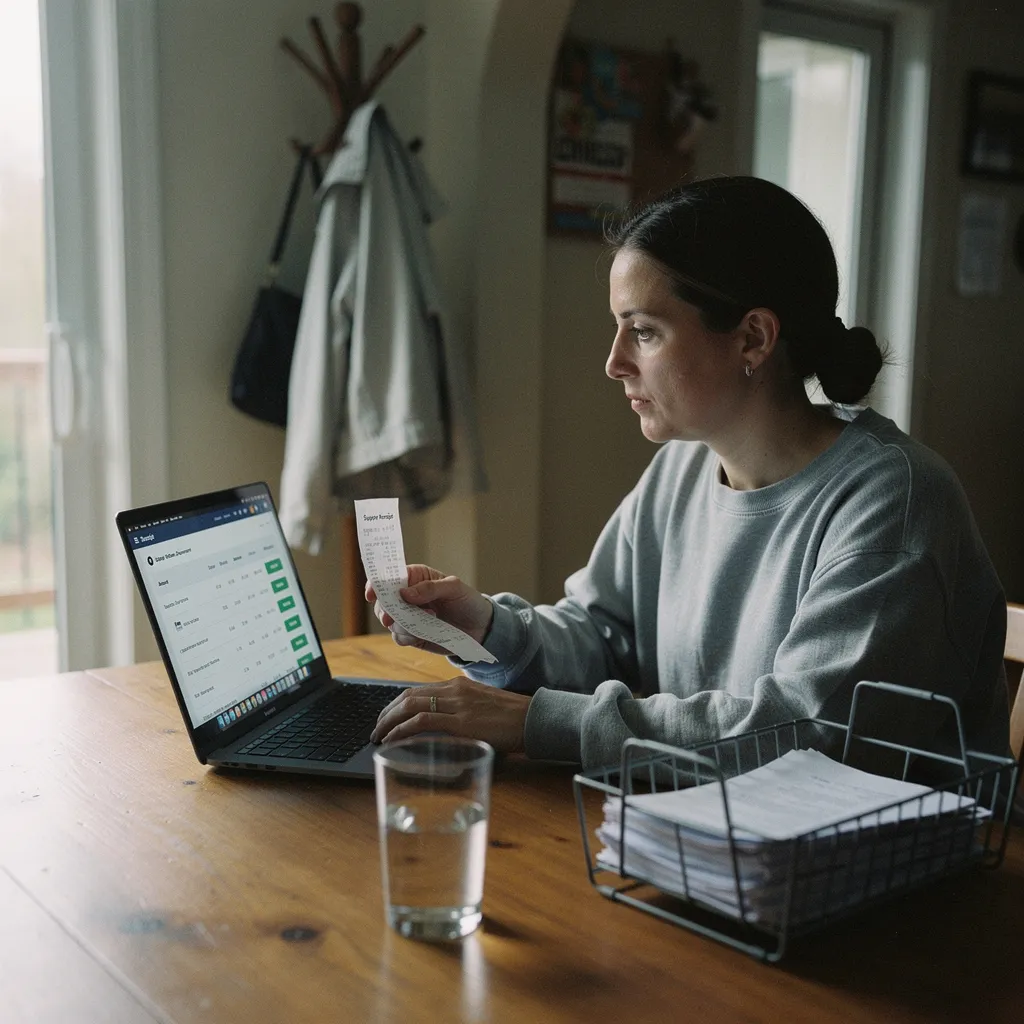
Someone leaves a job in retail or administration and wants steadier, flexible work they can do from home. Remote bookkeeping comes up in the search results. The title sounds simple, but what the job requires, what it pays, and how to actually get started aren't always clear.
What Remote Bookkeeping Careers for Beginners Actually Are
A bookkeeper records - organizes, and reconciles a business's financial transactions. That means logging income and expenses, managing accounts payable and receivable, reconciling bank statements, and preparing basic financial reports like profit-and-loss summaries. A remote bookkeeper does exactly the same work - but from a home office, connected to the client through cloud accounting software rather than a shared office network.
This isn't accounting. A bookkeeper maintains the day-to-day financial record. An accountant interprets those records, files complex taxes, and handles financial strategy. The distinction matters for beginners because bookkeeping has a lower barrier to entry - no CPA license required - but it also has a defined ceiling on scope and pay.
The job market is larger than most beginners expect. According to the Bureau of Labor Statistics as cited by WGU, there are about 174 -900 bookkeeping job openings every year in the United States4. That figure exists despite a projected 5% decline in overall bookkeeper employment through 2032, because those openings are driven by retirements, career transitions, small business growth, and companies choosing to outsource the function entirely rather than hire in-house staff.
How the Work Actually Runs Day to Day
Most remote bookkeepers use cloud-based software - platforms that let a client share read and write access to their books without sending files. The bookkeeper logs in - categorizes transactions, reconciles accounts against bank feeds, and flags anything unusual for the client to review. Communication happens by email or short video calls. The physical separation from the client is nearly invisible when the software infrastructure is in place.
A beginner typically starts with one or two small business clients - a sole proprietor, a small retail shop, a contractor. A single client with straightforward books might take four to six hours per month to maintain. At that scale - a worked example looks like this: if a beginner charges around $30 per hour and manages three clients each requiring about five hours per month, that's roughly $450 per month, or about $5,400 per year part-time. That's entry-level. A full-time remote bookkeeper handling several mid-size clients, or billing a flat monthly rate - earns considerably more, but the jump requires experience and a broader client roster.
The workflow also requires staying current on software. As WGU notes, formal bookkeeping education covers managing payroll and taxes, advanced spreadsheet functions, and adapting to evolving software tools.4 Beginners who skip that foundation often hit a wall when a client's needs grow slightly beyond basic transaction entry.
The Factors That Shape How Far a Beginner Gets
Three things determine how quickly a beginner builds a sustainable remote bookkeeping practice: credentials - software fluency, and the ability to find clients.
Credentials carry real weight. According to WGU, bookkeepers with formal education - such as an accounting fundamentals certificate - and certifications like the QuickBooks Certified User credential have a measurable edge in the job market and tend to secure better-paying roles.4 The QuickBooks Certified User exam is administered by Certiport, a recognized credentialing body, and is achievable without a four-year degree. The American Institute of Professional Bookkeepers (AIPB) also offers the Certified Bookkeeper designation for those with more experience. For a beginner - the QuickBooks certification is the more accessible first step.
Software fluency is directly connected to credentials but goes beyond passing an exam. Clients expect a remote bookkeeper to troubleshoot sync errors, set up chart-of-accounts structures, and explain a report on a short call. That comfort level comes from actual hands-on practice, not just course completion.
Finding clients is where many beginners stall. Remote bookkeeping is a service business, not an employment search. Some beginners find early clients through job boards or staffing firms that place remote bookkeepers with businesses. Others build their own client list through local small-business networks - freelance platforms, or direct outreach. Each path has different time requirements and income reliability.
The Real Tradeoffs a Beginner Should Know
The flexibility of remote bookkeeping is real. So are the downsides.
Side-by-side: a beginner taking a salaried part-time remote bookkeeping role through a staffing firm might earn a predictable $18 to $22 per hour with no client acquisition required. A self-employed remote bookkeeper billing the same hours at $30 to $40 per hour earns more per hour but spends unpaid time on client communication, invoicing, and finding new work. The hourly rate looks better on paper; the actual take-home per week may not be for the first year or two.
Income instability is the most common early challenge. Small business clients cancel, slow down for a season - or decide to bring the work in-house. A beginner with two or three clients has very little cushion when one leaves. Building to five or more clients takes time and effort that's not reflected in the hourly billing rate.
There's also a real learning curve around business finances - not the client's, but the bookkeeper's own. Self-employed bookkeepers are responsible for setting aside self-employment tax, tracking business expenses, and issuing their own invoices. A beginner who handles other people's financial records but neglects their own creates an obvious credibility problem.
The Mistakes That Cost the Most
Assuming the job is only data entry. Transaction entry is the smallest part of the work. Clients expect reconciliations, clean reports - and someone who catches errors. A beginner who treats the role as copying numbers from a bank statement to a spreadsheet will lose clients quickly once a discrepancy appears and there's no explanation for it.
Skipping certification because the barrier seems unnecessary. The job market is competitive despite the high number of annual openings. WGU's summary of BLS data makes clear that openings exist but so does competition from bookkeepers with credentials.4 A QuickBooks Certified User certification costs money and study time, but it's a concrete differentiator when a small business owner is comparing two candidates who both claim to know the software.
Underpricing to get clients and then staying underpriced. Many beginners charge very low rates to land their first client, then find it difficult to raise rates with that same client later. Starting too low also attracts clients who expect unlimited revisions and communication for a flat monthly fee. Setting a rate that reflects the actual time required - including email correspondence and error correction - is better practice from the start.
Treating remote work as requiring less professionalism. Clients who never see a bookkeeper in person still expect prompt responses, accurate work, and clear communication. A remote bookkeeper who goes quiet during tax season or delivers a report without explanation damages trust in ways that are hard to recover from. Reliability is the main thing a small business hires a bookkeeper for.
The three things that matter most: get at least one recognized credential before pitching clients - know the difference between employee-style remote work and self-employed freelancing and choose deliberately, and understand that the income ceiling rises with experience and client volume - but the first year is genuinely slow. Plan for that.
Figures cited here are approximate and subject to change. For advice specific to your own tax, legal, or career situation, consult a qualified professional.
References: 4 WGU.edu - citing Bureau of Labor Statistics data on bookkeeper employment projections and job openings.
References
- https://www.consumerreports.org/electronics-computers/computers/best-desktop-computers-of-the-year-a7188203360/
- https://www.apprenticeship.gov/apprenticeship-occupations/listings?occupationCode=43-3031.00
- https://www.tax.ny.gov/careers/
- https://www.wgu.edu/blog/why-bookkeeping-remains-strong-career-choice-changing-job-market2502.html
- https://www.personnel.alabama.gov/jobs
- https://www.usajobs.gov/Search/?k=accounting
Disclaimer
This article is for general informational purposes only and doesn't constitute professional, financial, medical, or legal advice. Consult a qualified professional about your specific situation.