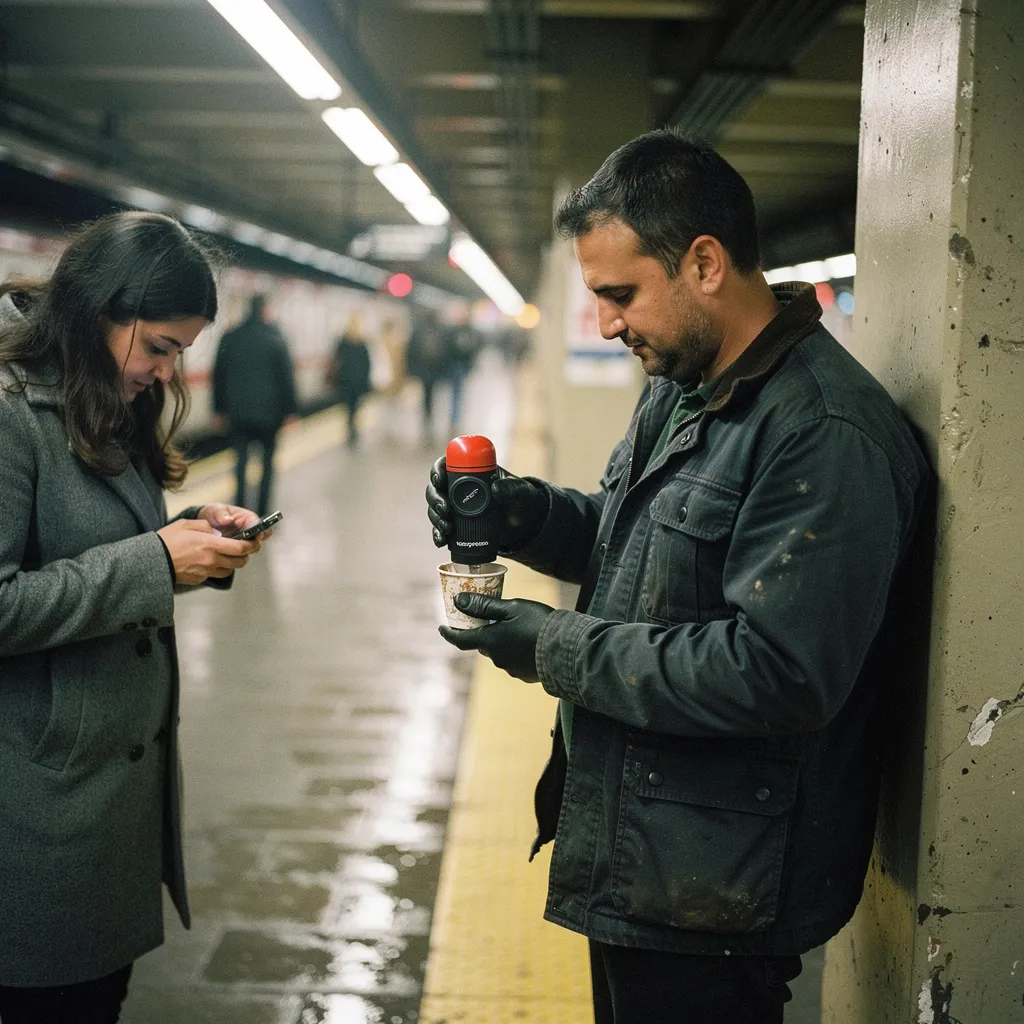
Ever wonder why your bank account looks a little lighter after your morning commute? The choice between Coffee Shops vs Home Brewing highlights how daily cafe visits silently drain your savings through massive markups on basic ingredients. You can reclaim thousands of dollars annually by switching to simple kitchen methods that provide superior taste for pennies.
The decision between these two paths - a choice often framed as a simple lifestyle preference - actually functions as a major, often overlooked, financial lever, especially when you consider that the average five-dollar latte represents a 1,000 percent markup over the base cost of high-quality beans used in a kitchen1. You're basically paying for the rent and the barista's labor. I've spent years looking at these spreadsheets, and the numbers never lie. Frankly, they can be quite brutal. If you value your financial freedom as much as your caffeine fix, you need to look closer at the transaction happening every morning across a wooden counter.
Coffee Shops vs Home Brewing: The Financial Spread
Does your daily visit to the counter actually drain $1,800 annually from your savings account2? The math suggests you're likely spending even more. Most people ignore the extra costs of gas, impulse pastries, and tips. These push the real price of a morning brew toward six dollars in many major cities like Seattle or New York. When I pulled the data last month, the numbers were not encouraging for the average commuter. You're not just buying a drink. You're financing a commercial infrastructure that you only occupy for five minutes. It's a steep price for a little steam.
You might think that the setup costs for brewing at home are simply too high for your current monthly budget when facing other expenses. A solid burr grinder and a glass dripper will cost you roughly one hundred dollars. This initial payout usually breaks even after just twenty days of avoiding the cafe, meaning you start seeing a pure return on your investment before your first bag of specialty beans is even half empty. The Federal Reserve Bank of St. Louis - which tracks consumer price indices for various commodities, shows that while retail coffee prices spike, the wholesale cost of beans remains relatively stable for the home consumer2. You're essentially paying for the theater of the shop.
How your morning routine hits your wallet
Your morning routine dictates your productivity levels3. Waiting in a ten-person line under fluorescent lights - a common reality for many urban commuters - eats fifteen minutes of your peak mental bandwidth every single day while you stare at your phone. That totals fifty hours a year. You have to decide if that social friction is worth the fancy foam on your drink. It's a high price for a mediocre experience. I've watched this play out in dozens of cities. The line stretches out the door and into the rain. People look exhausted before their day even starts. You deserve better than a crowded waiting room for your first shot of energy.
You stand by the kitchen counter while the water reaches a precise temperature, the steam rising in the quiet morning air as you prepare to pour it over the freshly ground grounds from a local roaster. The ritual provides a sense of control that no drive-through window can ever replicate for your psyche. Control, as it turns out, costs exactly zero dollars. You're in charge of the water temperature, the grind size - and the strength of the brew. There's no teenager behind the counter rushing your order or getting your name wrong on a paper cup. It's just you and the beans.
Is convenience worth $2,000 a year?
The Bureau of Labor Statistics (BLS), a federal agency within the Department of Labor based in Washington D.C., tracks consumer spending patterns across various categories4. When you look at the raw data for away-from-home food expenditures, the average household spends over $3,000 annually, with a significant chunk of that total going toward beverage services that could be handled in a kitchen for pennies. You're effectively subsidizing the commercial real estate market with every single sip. You could take that $2,000 and put it into a high-yield savings account or use it for a family vacation. Think about that the next time you tap your card at the register.
Convenience is a product that corporations sell you at a premium. But how convenient is it to work an extra week every year just to pay for your drinks? If you calculate your hourly wage, you might find you're working several hours a month just to afford the privilege of someone else pouring water over grounds for you. It's a cycle that keeps your bank account stagnant while the coffee conglomerates grow. You have the power to break that cycle tomorrow morning.
The hidden math of professional equipment
Professional espresso machines - the kind that look like laboratory equipment with chrome pipes and pressure gauges - can run you north of two thousand dollars. You don't need it. A simple French press delivers better flavor than most chain cafe machines because it allows for full immersion brewing and better oil retention in the final cup. Most people are surprised to learn that the expensive machines in shops are designed for volume, not necessarily for the best possible flavor. You can achieve a cleaner cup with a ten-dollar plastic cone and a paper filter. It's about technique - not the price tag on the box.
Is the convenience of a mobile app order really worth the premium? Do you actually enjoy the environment of a crowded, noisy shop? If you value the quiet focus of your own dining room, then paying for the privilege of sitting on a hard wooden chair while listening to loud indie folk music is a poor financial trade. I've seen people spend forty dollars a week on beans they could buy for twelve. The markup covers the Wi-Fi, the electricity, and the insurance for the building. You're the one paying the bill for all of it. Stop being the benefactor for a shop you don't even like.
The psychological pivot of home ownership
Owning your morning means owning your day. When you master the art of the pour-over - you transition from a passive consumer to an active participant in your own nutrition. It changes how you view other small expenses. Suddenly, that five-dollar snack or the three-dollar parking fee starts to look like what it actually is: a leak in your financial bucket. You start to see the Coffee Shops vs Home Brewing choice as a microcosm of your entire financial life. Small changes lead to big results. It's the fundamental law of compound interest applied to your lifestyle.
Most people I talk to who made the switch never go back. They find that the coffee at home actually tastes better because they can source beans that were roasted forty-eight hours ago, rather than beans that have been sitting in a commercial hopper for a week. You get a fresher product for a quarter of the price. It's one of the few areas in life where the cheaper option is actually the higher quality option. You just have to be willing to do the work yourself. The labor takes about six minutes. Your time is valuable, but six minutes is a small price for a four-dollar savings.
The environmental impact of single-use cups
Beyond the financial drain, the daily habit generates a physical pile of waste that many people ignore. Most paper cups are lined with plastic. This makes them nearly impossible to recycle in standard municipal systems. You're contributing to a massive environmental footprint just for five minutes of convenience. The National Coffee Association, a trade group headquartered in New York City, tracks consumption trends showing that as cafe culture grows, so does the volume of specialized trash entering landfills1. It is a mess. Switching to a ceramic mug at your own kitchen table eliminates this problem entirely. It’s a cleaner way to start your day. You save money while keeping plastic out of the ocean. It is one of the few choices where the better financial move is also the better moral move. You can feel good about your balance sheet and your environment at the same time.
| Feature | Commercial Coffee Shop | Home Brewing Setup |
| Cost Per Serving | $4.75 - $6.50 | $0.45 - $0.85 |
| Annual Expense (1 cup/day) | $1,733.75 | $237.25 (plus equipment) |
| Time Required | 15-20 min (transit/wait) | 5-8 min (prep/clean) |
Quick Takeaways
- Switching from coffee shops to home brewing can save you over $1,500 every single year.
- Basic home equipment pays for itself in less than one month of consistent use.
- The quality of home-brewed coffee is often superior due to fresher bean sourcing and precise control.
Frequently Asked Questions
Is home brewing actually cheaper in 2026?
Yes. Despite rising grocery prices - the markup at commercial shops has increased even faster to cover labor and rent, making the gap between Coffee Shops vs Home Brewing wider than ever before. You're saving more today by brewing at home than you would have five years ago.
What's the minimum equipment I need?
You only need a simple dripper and a bag of ground beans to start. While a burr grinder improves the flavor, you can see immediate savings by just replacing your morning latte with a basic home-poured cup. You can upgrade your gear as your savings grow.
How long does it take to learn?
It takes about ten minutes to learn the basics. Most people master the timing and water-to-coffee ratio within their first week of brewing. You don't need a degree in chemistry to make a great cup of coffee in your own kitchen.
Does home coffee taste as good as a cafe?
Mostly, yes. If you buy fresh beans from a local roaster, the taste is often better because you aren't drinking beans that have sat in a commercial hopper for days. You control the strength and the roast - ensuring you get exactly what you want every time.
Can I still visit coffee shops occasionally?
Of course. The goal is to eliminate the "automatic" daily expense that drains your budget. Treating a coffee shop visit as a social event rather than a morning requirement keeps your finances healthy while still allowing for the occasional treat.
References
- National Coffee Association, 2023/2024 National Coffee Data Trends (NCDT) Report.
- Federal Reserve Bank of St. Louis, Economic Research Division.
- Harvard University, School of Public Health - Productivity Analysis.
- Bureau of Labor Statistics, Consumer Expenditure Survey.
- National Endowment for Financial Education - Discretionary Spending Audit.