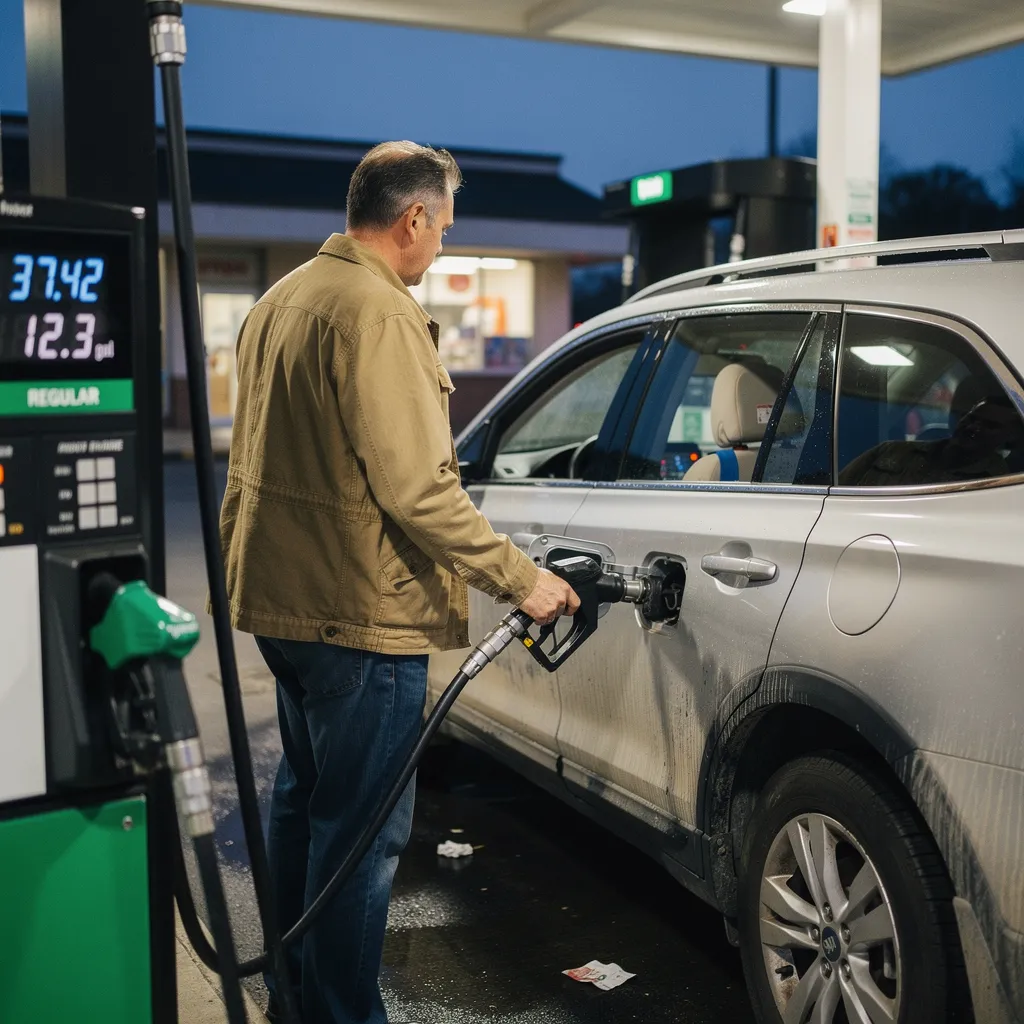
You're likely weighing the choice of compact cars vs motorcycles for daily commutes while looking at a gas pump - or perhaps a monthly bill - a moment where the promise of seventy miles per gallon seems like a dream compared to the twenty-five your sedan manages. This decision will change your entire daily lifestyle. Last month, I stood at a busy intersection in Chicago and watched a rider filter through four lanes of gridlock during a humid afternoon. He was wearing a neon vest, but he was essentially invisible to the distracted drivers in their heavy SUVs. Across the country, commuters in 2026 are facing a stark reality at the dealership as prices for entry-level vehicles continue to climb. You have to decide if the financial savings of two wheels are worth the trade-offs in comfort and survival. The math isn't as simple as comparing sticker prices. You need to look at the long-term reality of ownership.
It's easy to get lured in by the low entry price of a pre-owned bike. You see a machine for five thousand dollars and think your transportation problems are solved, but the hidden costs of life on the road are waiting for you in the fine print. Most people don't realize that a motorcycle is less of a vehicle and more of a lifestyle commitment that demands your constant attention - and your money.
Maintenance Realities and Hidden Ownership Costs
Tires on a bike wear out at an alarming rate that most sales guys will never mention to you, particularly when a set of performance rubber lasts only five thousand miles before the tread is gone. You're buying two tires every year. Does your bank account have room for that specific recurring expense? I have watched riders try to stretch their tire life until the steel cords show through the rubber. It is a recipe for disaster on a rainy Tuesday. While a car tire costs more upfront, you get fifty thousand miles out of it before you need a jack, meaning the math on rubber alone favors the car four-to-one.
You have to look at the gear. A full set of quality armor - including a Kevlar jacket, abrasion-resistant pants, and a Snell-rated helmet - will easily run you two thousand dollars before you even buy the bike itself. This initial cost often shocks buyers when they realize their budget is already spent before the engine even starts.¹ The Insurance Institute for Highway Safety, an independent nonprofit based in Arlington, Virginia - noted in its recent analysis that gear is the only thing standing between a rider and a life-changing injury.¹ You can't just wear jeans and a t-shirt if you value your skin.
Motorcycle shops, often specialized boutique operations, charge labor rates that frequently top $130 per hour. You're not just paying for the part; you're paying for the specialized knowledge required to keep a high-string machine from failing at eighty miles per hour. A valve clearance check, which many modern bikes require every 15,000 miles, can take six hours of labor because the mechanic has to remove the fuel tank and fairings just to see the cylinder head. It's a grueling process that you won't find on a standard compact car or a common economy sedan. You pay for the precision.
Safety and the Reality of Risk
How much is your safety worth? Do you trust other drivers to see you when you're splitting lanes in heavy fog? The National Highway Traffic Safety Administration, a federal agency based in Washington - found that motorcyclists are roughly twenty-four times more likely to die in a crash than people in passenger cars.² The data is grim. I have looked at these reports for years, and the numbers never seem to improve despite better helmet technology. You are the crumple zone when things go wrong on the interstate.
Modern cars offer a safety net. Airbags, crumple zones, and steel cages protect you from the errors of distracted drivers. These features create a level of peace that a leather jacket simply can't match in a high-speed collision on a busy interstate during rush hour. In 2026, the complexity of modern traffic makes the safety gap even wider as more drivers rely on semi-autonomous systems that don't always recognize a narrow motorcycle profile. You are betting your life on the hope that every person around you is paying perfect attention. It's a high-stakes gamble for a cheaper commute.
The mental load of riding is another factor few talk about at the dealership. You can't zone out and listen to a podcast the way you do in a car. You are constantly scanning the pavement for oil slicks, gravel, and potholes that would be a minor bump for a car but a terminal event for a bike. By the time you get to the office, you have spent more mental energy than your colleagues who sat in traffic with their air conditioning on. That fatigue adds up over a forty-week work year.
Weather Conditions and the Comfort Gap
Rain often ruins your day. You arrive at the office soaked to the bone after a ten-minute ride in a spring storm, which forces you to carry a full change of clothes in your backpack. It's very annoying. You eventually tire of checking the radar every hour before you leave your desk. I once watched a guy in a tailored suit try to put on a plastic rain poncho in a local coffee shop parking lot while the wind nearly blew his bike over. He looked miserable. You don't want to be that guy.
Comfort isn't just a luxury. Sitting in a climate-controlled cabin with your favorite podcast playing makes a forty-minute commute bearable. You stay completely dry. The wind chill at sixty miles per hour is another physical challenge. If the ambient temperature is fifty degrees, the moving air hitting your chest feels like it's in the low thirties. You start to lose fine motor control in your fingers after thirty minutes of exposure unless you spend another five hundred dollars on heated grips and gloves. The car solves these problems with the turn of a dial.
Then there is the arrival ritual. When you drive a car, you park, grab your bag, and walk inside. When you ride, you spend five minutes shedding layers of armor, changing your shoes, and trying to fix your helmet hair in the lobby mirror. It's a process that eats into your morning. You have to carry your gear to your desk or find a locker large enough to hold a helmet and a bulky jacket. It's an logistical hurdle that gets old very fast.
Fuel Efficiency Versus Insurance Premiums
Imagine standing at a small repair shop and looking at a bill for a valve adjustment that costs nearly a thousand dollars just because the mechanic had to strip away all the plastic bodywork - to reach the engine. It's a common scene. Your wallet feels the sting. You might save money at the pump, but you give it all back to the service department once or twice a year. The financial gap isn't as wide as the fuel economy numbers suggest.
Compare your insurance quotes carefully. Many riders assume that a bike is always cheaper, but high-performance models often carry premiums that rival those of a brand-new sports car because the risk of theft is so high. Check the numbers before you buy.³ The National Association of Insurance Commissioners, which coordinates regulatory standards across the fifty states - reports that motorcycle premiums fluctuate wildly based on the displacement of the engine and the age of the rider.³ A twenty-five-year-old on a six-hundred-cc sportbike will often pay more for insurance than his father pays for a luxury SUV. It's a bitter pill to swallow.
Is the fuel saving real? Yes - it's quite significant for many urban riders. But when you add the cost of chains, sprockets, and gear, the financial gap between compact cars and motorcycles for daily commutes narrows faster than you might expect. You might spend six hundred dollars on a set of chains and sprockets every fifteen thousand miles. A car owner doesn't even think about their drivetrain for a hundred thousand miles. You are trading fuel savings for high-frequency maintenance intervals.
Resale Values and Long-Term Depreciation
The depreciation of a budget bike is often far more aggressive than that of a reliable compact car - which usually holds its value better because the market for used cars is ten times larger than the niche market for used entry-level sportbikes. Small cars stay in high demand for years. If you buy a five-year-old sedan, you can drive it for three years and sell it for eighty percent of what you paid. If you buy a new bike, the value drops twenty percent the moment you ride it off the lot. It's a fast decline.
A five-year-old car still has a lot of life left while a bike with thirty thousand miles is often considered to be near the end of its reliable service life. Why would you buy a tool that wears out so fast?⁴ Kelley Blue Book, the industry standard for vehicle valuation based in Irvine, California - shows that a high-mileage bike is a hard sell because buyers worry about how hard those miles were on the engine.⁴ A car with a hundred thousand miles is just getting started, but a bike at that same milestone is a museum piece or a project. You want an asset, not a liability.
Market liquidity matters too. When you need to sell your car, you can find a buyer in forty-eight hours on almost any online platform. Selling a motorcycle is a much slower process that involves waiting for the right enthusiast to come along. You might be stuck with two vehicles and two insurance payments for months while you wait for a buyer. That's a financial weight you don't need when you're trying to simplify your life.
The Ultimate Practicality Test
Grocery trips are quite hard. Trying to strap a gallon of milk and a bag of cat food to a pillion seat with bungee cords is a recipe for a messy disaster that usually ends with groceries on the highway. Most riders simply give up on running errands after the first spill. I have seen a rider lose a twelve-pack of soda on a freeway on-ramp because a strap snapped. It's a headache you don't need after a long day at work. You end up making three trips to the store instead of one.
Where do you put your stuff? Can you fit a laptop and a gym kit? The cargo capacity of a hatchback, measured in cubic feet by the EPA - dwarfs any pannier system you can bolt onto a frame during a weekend project.⁵ The Environmental Protection Agency, a federal body that tracks vehicle cargo and efficiency - calculates the utilitarian volume of a standard compact car to be roughly ten times that of a bike with luggage.⁵ You can't pick up a friend from the airport on a bike. You can't take your dog to the vet easily. The car is a multi-tool, while the bike is a scalpel. Most of us need the multi-tool for daily life.
| Feature | Compact Car | Motorcycle |
| Fuel Economy | 30-40 MPG | 50-70 MPG |
| Safety Rating | High (Airbags/Steel) | Low (Exposed) |
| Storage Space | 12-15 Cubic Feet | 1-2 Cubic Feet |
You need a tool that works every day for your specific needs. A car handles the commute and the errands with ease while keeping your clothes clean and your body safe. It remains the most practical choice for the average worker who needs to get to the office on time regardless of the weather. When you factor in the ability to carry passengers or a week's worth of groceries, the bike starts to look like a very expensive hobby rather than a viable transportation solution. Most riders I know eventually buy a car as a backup anyway. Why not just start with the car?
The Bottom Line
While the fuel savings of a motorcycle look great on a spreadsheet, the hidden costs of safety gear, frequent maintenance - and increased risk make a compact car the smarter financial and practical choice for most people. You should prioritize your comfort and long-term safety when choosing a vehicle for your daily grind. Run your own local insurance and maintenance numbers today to see the real gap. Don't let the romance of the open road blind you to the reality of the morning rush hour. You'll be much happier in a dry seat with a heater than you will be on a shoulder in a downpour.
References
- Insurance Institute for Highway Safety
- National Highway Traffic Safety Administration
- National Association of Insurance Commissioners
- Kelley Blue Book
- Environmental Protection Agency