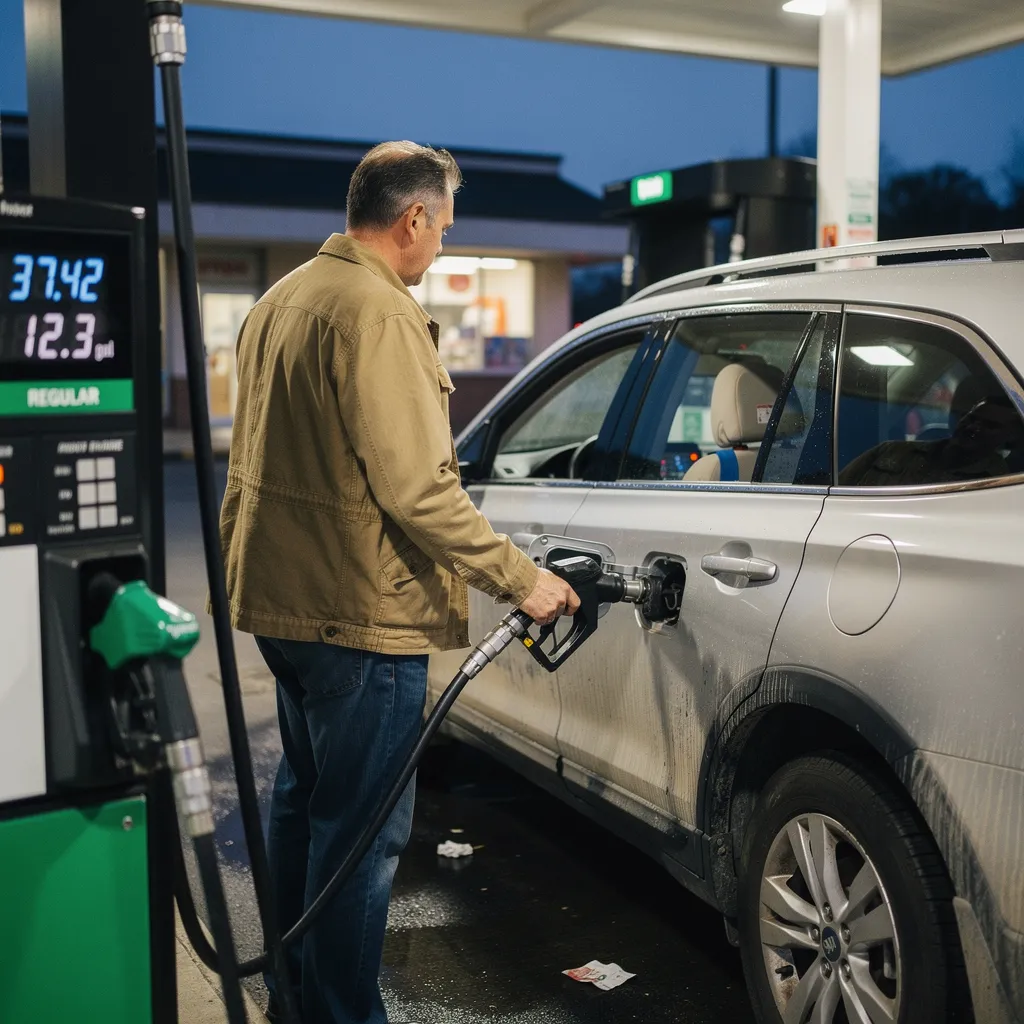
Choosing between a high-mileage newer vehicle and a low-mileage older model requires more than simply comparing odometer readings. Vehicle condition is influenced by usage patterns, maintenance history, and material aging over time. Components such as rubber seals, fluids, and safety systems degrade regardless of mileage, which can affect reliability and long-term ownership costs. This guide explains how to evaluate both options by focusing on mechanical condition, safety features, and depreciation to help you make a practical and informed purchase decision.
The Hidden Decay of the Garage Queen
When a car just sits in a dark garage, the hoses turn brittle and the tires end up with permanent flat spots from the weight. These hidden problems usually turn into oil leaks, vacuum issues, or a sudden coolant spray the very first time you try to hit 70 on the highway. It's almost funny, in a dark way. You pay a premium for low miles, but you're actually buying a collection of dried-out seals. When an engine sits, the oil drains away from the top-end components. This leaves bare metal exposed to the moisture in the air. You start it up after six months and for those first few seconds, it's metal grinding on metal. (It's a sound that makes mechanics wince.)
The Bureau of Transportation Statistics, a branch of the U.S. Department of Transportation based in Washington D.C., notes that the average age of vehicles on the road has climbed to over 12 years in 2026.1 This means you're increasingly likely to encounter these "time-worn" survivors. People are holding onto cars longer, but they aren't always driving them. Comprehensive repairs to bring a long-dormant vehicle back to road-legal status often exceed $2,000 in parts and labor. That's a lot of money for a "low mileage" bargain. You aren't just buying a car. You're actually managing a depreciating asset, even if you want to think of it as just a way to get to work.
Think about the polymers. Plastic and rubber don't care if the car is moving. They degrade through a process called oxidation. In a car that's driven daily, the heat cycles and fluid circulation keep these parts somewhat supple. In a car that sits, they just get stiff and crack. You pull out of your driveway and suddenly your power steering pump is screaming because a $5 O-ring turned into plastic. So now you're staring at a $400 repair bill for a machine that was supposed to be in mint condition. Does that actually feel like you won? Not really.
The Case for the Highway Hero
Look, let's flip the script and check the other side of this High-Mileage Used Cars vs Low-Mileage Older Models argument. Take a 2021 model that's already clocked 110,000 miles. It's lived on the highway. Most of that distance happened while the engine stayed at a perfect temperature, the oil kept moving, and the alternator kept the battery topped off. This is the "Highway Hero." You might be scared of six-figure odometers, but a modern engine can easily do 200,000 miles if it was treated well. In fact, many high-mileage cars have already had their major "wear items" replaced. The water pump, the alternator, the belt tensioners - they've likely been swapped out recently.
You're buying a car that has been proven. If you drop a massive premium on a ten-year-old car with 20,000 miles, you're paying for potential that usually vanishes the second you start driving it every day. It's basically a bet. But a high-mileage car with a stack of maintenance records? That's a resume. I've seen high-mileage trucks that look better underneath than five-year-old cars from the Salt Belt. It all comes down to the owner. Did they change the oil? Did they flush the coolant? If you can verify the maintenance, that high number on the dash is more like a badge of honor than a red flag.
And let's be real about the price. You can usually get a much newer, safer, and more fuel-efficient vehicle if you're willing to accept higher mileage. You're trading a number on a screen for actual technology. You get better infotainment. You get better seats. Plus, you get a car that doesn't actually smell like a moldy basement. For about 90% of buyers, that's a trade they'd take in a heartbeat. (And your spine will probably thank you during those three-hour drives.)
The Safety Gap Nobody Talks About
High-Mileage Used Cars vs Low-Mileage Older Models often differ in safety. Here is the part that actually carries weight. Most older cars simply don't have the structural frames or the side-curtain airbags that come standard in newer builds. The Insurance Institute for Highway Safety (IIHS), a nonprofit funded by auto insurers and headquartered in Arlington, Virginia, has spent years proving that a decade of progress in automotive engineering makes a massive difference in a crash.2 They've done head-to-head tests between older "luxury" cars and modern budget cars. The modern car wins. Every. Single. Time.
When you pick a 2008 model with 40,000 miles over a 2022 car with 90,000 miles, you're basically opting for outdated safety tech. You're giving up things like automatic emergency braking. You're missing out on blind-spot monitoring. Is that low number on the dash really worth the extra risk to your family? Not really. We love to talk about how they used to build them, but the cold data says they used to build them to fold up like soda cans during a wreck. This modern high-strength steel is basically a miracle of engineering. It's lighter and stronger, but it wasn't standard twenty years ago. You want the steel that saves your life, not the steel that was "barely used."
Think about the airbags too. Airbag sensors and igniters have a shelf life. While they're designed to last the life of the car, a fifteen-year-old system is more of a question mark than a three-year-old one. You're betting your life on sensors that have been sitting in humidity and temperature swings since the first Obama administration. It's a gamble. I'd take a high-mileage car with modern crumple zones over an old mint one any day. Safety shouldn't be a luxury; it has to be the bare minimum.
The Financial Math of Depreciation
Let's talk about your wallet. If you buy a low-mileage older car at a premium, you're in a "value trap." The moment you start driving it and the miles climb to "normal" levels, the value of that car is going to crater. You're paying for a scarcity that you are personally destroying every time you drive to the grocery store. It's a losing strategy. You pay $15,000 for it because you're impressed by those 20,000 miles. Two years go by, you hit 50,000 miles, and suddenly it's just another old car. Now the market says it's only worth about $6,000. You basically just lit $9,000 on fire for no reason.
Now, compare that loss to the high-mileage newer vehicle. Most of that painful depreciation has already hit the previous owner. You pick it up for $12,000 with 100,000 miles on the clock. Two years later, you're at 130,000 miles. It's still worth maybe $9,000. Your "cost of ownership" is much lower because you aren't fighting the depreciation curve as hard. This is the math that fleet managers use. They don't care about the odometer; they care about the cost per mile. You should too. (Unless you're a collector, but let's be honest, you're looking for a daily driver, not a museum piece.)
You also have to factor in insurance. Some insurers might give you a harder time with an older car, or the payout in a total-loss scenario might be based on "market value" that doesn't account for your low mileage. You'll be arguing with a claims adjuster about why your 2010 Buick is worth more than the $3,500 they're offering. That's a headache you don't need. High-mileage newer cars have a more predictable market value. It's cleaner. It's simpler. And it's better for your mental health.
| Comparison Factor | Low-Mileage Older Model | High-Mileage Newer Model |
| Initial Purchase Price | High (Collector Premium) | Lower (Utility Based) |
| Maintenance Risk | Dried seals, brittle rubber | General wear and tear |
| Safety Technology | Outdated (2026 standards) | Modern (ADAS systems) |
| Depreciation Rate | Steep once driven | Gradual/Already bottomed |
Buying your next car shouldn't feel like you're playing the Powerball. But when you ignore how machines actually age, that's exactly the game you're playing. I've watched people sink $3,000 into a "perfect" low-mileage Volvo within the first six months of ownership. They were totally stunned. I wasn't surprised at all. That car had sat for two years, so the second it hit highway speeds, the transmission seals just gave up. You really have to ask yourself if you're buying a car for the odometer number or for the actual job of getting you to work. If it's about the transportation, the high-mileage modern car is the smarter move every single time.
The Psychology of the Odometer
We've all been trained to be terrified of high numbers. It's a leftover habit from the 1970s when a car with 100,000 miles was basically a pile of scrap waiting for the scrapyard. But things changed. Manufacturing tolerances got tighter. Oils got better. Materials improved. A modern Toyota or Honda with 150,000 miles is usually in better mechanical shape than a 1985 sedan with only 30,000 miles. We really need to update our internal thinking on this. The odometer is just one data point. It isn't the whole story. (And anyone telling you different is probably trying to sell you a low-mileage headache.)
When you weigh High-Mileage Used Cars vs Low-Mileage Older Models, you're actually looking at two completely different categories of risk. The high-mileage car brings the risk of parts that have simply reached the end of their life. The low-mileage old car carries the risk of dry rot and years of neglected maintenance. I'd much rather deal with a worn-out alternator I can test than a hidden vacuum leak that only pops up when the engine gets hot on a random Tuesday. One is just a standard repair; the other is a total mystery. And mysteries in cars get expensive fast.
Don't let the scary number on the dash push you into a bad financial corner. Just take the car to a trusted mechanic. Get a real pre-purchase inspection. If that high-mileage car is clean and has a full service history, go ahead and buy it. If the low-mileage car still has ten-year-old tires and the owner forgot the oil changes because they didn't drive it much, just walk away. Run fast. Your bank account will thank you in 2026 and beyond. Reliability is earned through maintenance, not granted by a lack of use.
Pro Tip: You should always check the four-digit date code on the tires when you look at an older car with low miles. Any tire older than six years is a safety hazard, even if the tread looks like it's brand new. While you're comparing High-Mileage Used Cars vs Low-Mileage Older Models, go ahead and add the cost of four new tires to the price of the older car right now.
Frequently Asked Questions
Is 100,000 miles still the death sentence for used cars?
No, not even close. Most vehicles built in the last fifteen years are engineered to hit 200,000 miles without a major engine or transmission failure, provided you maintain them. That old 100k limit is just a myth from a totally different era of engineering. You should focus on the actual service history instead of just looking at the odometer.
Can a car with low miles actually have odometer fraud?
Yes, it definitely happens. While digital odometers are harder to mess with than the old mechanical wheels, software hacks still make it possible. Always cross-check the odometer reading against a solid vehicle history report. If the report says it had 80,000 miles in 2022 but shows 40,000 miles in 2026, you've found a major problem.
Which parts are actually the worst ones to let sit unused?
It's usually the brakes and the fuel system. Brake rotors will start to rust and pit if they aren't used, which leads to annoying vibrations and terrible stopping power. Gasoline also goes stale over time and can gum up your fuel injectors or the pump. If a car has been sitting for more than a year, you should probably expect to drain the tank and swap out the fuel filters.
Does the term Highway Mileage really matter?
Absolutely. Highway miles mean fewer gear shifts, less wear on the brakes, and an engine that stays at its optimal temperature. Honestly, 10,000 miles of stop-and-go city driving is way harder on a car than 30,000 miles of cruising on the interstate. This is why many high-mileage commuters make such great used car buys.
Should I actually worry about outdated safety tech?
Yes. The gap in crash safety between a 2010 car and one from 2020 is actually massive. Major structural changes and better airbag logic make newer vehicles significantly safer for everyone inside. If you're picking a car for a long daily commute, safety needs to outweigh the low mileage of an older model every single time.
Reference
- Bureau of Transportation Statistics. (2026). Average Age of U.S. Vehicles and Implications for Maintenance. U.S. Department of Transportation.
- Insurance Institute for Highway Safety. (2026). The Safety Gap: Why Model Year Matters More Than Mileage. IIHS Research Press.
- Consumer Reports. (2025). Used Car Reliability: The Hidden Costs of Aging Components.
- National Highway Traffic Safety Administration. (2026). Odometer Fraud and Vehicle Safety Trends.
Disclaimer: This article is for informational purposes only and does not constitute financial or mechanical advice. You should always have a qualified professional inspect any used vehicle before you buy it. Car values and maintenance costs vary depending on your region and the specific condition of the vehicle.